Warehouse
Labour Shortage Solutions for Warehouse Managers: Smart Equipment Features That Maximize Efficiency
February 17, 2026
Warehouse managers continue to face labour shortages across economic cycles, even as conditions shift by region or sector. When seasoned operators retire, they leave their former companies without the experienced judgment and site-specific knowledge that new hires take years to develop.
Pairing technology with thorough training and practical policies can reduce the time required for new operators to operate forklifts safely without constant supervision.
In a warehouse labour shortage, smart equipment solutions help operations focus on practical operator training outcomes while maintaining hiring standards.
Statistical Analysis of Operator Shortage Trends
Labour shortages in warehouse operations reflect long-running workforce pressures rather than a single economic cycle.
Industry analysis suggests that demographics, skill pipelines, regional conditions and short-term market shifts drive this challenge. These workforce pressures reshape safety risk, productivity and operational reliability.
Body Gap vs. Skills Gap
Labour challenges combine limited worker availability and declining experience levels. The Material Handling Equipment Distributors Association’s 2026 outlook highlights ongoing hiring difficulty and pressure on skills development.
Merely filling positions isn’t sufficient to restore operational capability because:
- Regional labour pools shrink faster in secondary markets than in major hubs.
- Training pipelines fail to replace experience at the pace retirements accelerate.
- Entry-level hires require extensive ramp-up periods to reach baseline proficiency.
The Trend of Turnover and Knowledge Loss
Workforce churn deepens the skills challenge. High turnover across warehousing roles continues to disrupt workforce stability as long-tenured operators retire and take decades of situational judgment with them. New hires replace labour capacity, but experience rebuilds more slowly.
Bringing younger staff on board may introduce more problems:
- Frequent onboarding cycles increase training costs and supervisors’ workloads.
- A lack of training may cause new hires to ignore safety practices that would be second nature to veterans.
- High turnover limits inexperienced hires’ opportunities to learn from uncommon or high-risk scenarios.
The Impact of the Expanding Gap
Limited experience directly affects safety outcomes. The Occupational Safety and Health Administration’s severe injury and fatality reporting shows forklift incidents remain a recurring source of high-consequence injuries in warehousing environments. The Canadian Centre for Occupational Health and Safety highlights a lack of training as one of the leading factors in forklift incidents.
When you have an experienced forklift operator shortage, solutions technology is an essential safety control, reducing risk associated with workforce transitions. Success increases when paired with proper training and oversight.
As experience levels decline, operators tend to repeat the same high-risk mistakes more often, especially in fast-paced warehouse conditions.
Some safety gaps may include:
- Limited spatial awareness, leading to increased collision risk in congested aisles
- Inconsistent load handling that raises instability during lift and travel
- Delayed hazard recognition, slowing corrective response under pressure
Technology Features That Reduce Training Time
Modern equipment design shortens the path from instruction to independent operation. Traditional training models depend on extended learning time and shadowing of experienced operators. Smart equipment changes learning into a controlled, real-world operation where design reinforces correct behaviour from the start.
Accelerating Readiness From Classroom to Floor
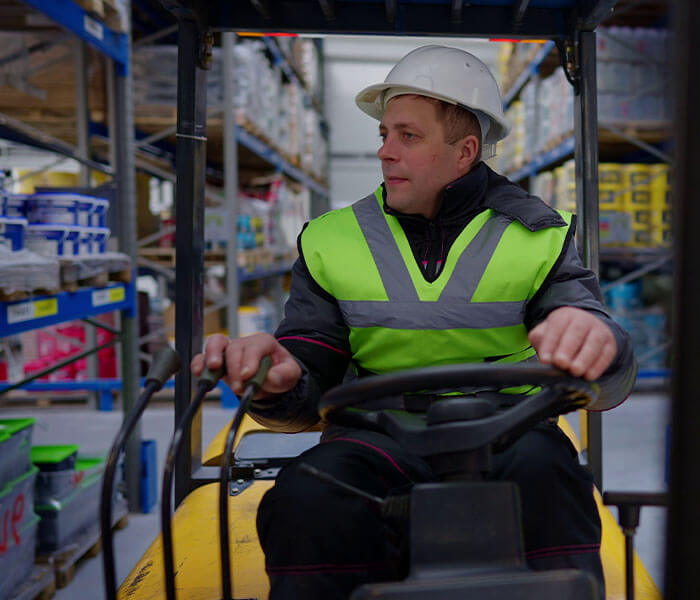
Equipment design choices help operators build confidence without relying on constant supervision. As a result, new staff get up to speed faster while still meeting safety requirements.
Examples of forklift features that facilitate skill development are:
- Integrated prompts to reinforce correct actions during live operation
- Simplified control layouts to reduce the number of inputs trainees must memorize
- Consistent responses that build trust between operators and machines
Digital Interventions Acting as Guardrails
Digital controls increasingly function as operational guardrails rather than passive warnings. Built-in features allow new hires to operate forklifts safely while they develop situational judgment in real-world operating environments. These systems create safe operating envelopes without removing operator responsibility.
Built-in safety features may include:
- Automatic speed reduction in zones overlapping with foot traffic
- Pedestrian detection alerts when people enter active travel paths
- Impact sensing and incident logging that captures collisions and near-misses for follow-up coaching
- Access controls and operator verification that prevent unauthorized use
The Smart Advantage in Load Handling
Automated assistance reduces much of the uncertainty in load-handling tasks. Lift and tilt support systems maintain stability by managing movements that often challenge inexperienced operators.
Automated forklifts are a practical workforce strategy for companies that prioritize reduced training time. These machines might feature:
- Auto-leveling forks to help keep loads aligned during pickup and placement
- Height and travel limiters that prevent unsafe lifting or movement in restricted areas
- Load weight sensors with overload warnings to prevent lifts exceeding their rated capacity
Intuitive Control Systems and Their Impact
Control system design directly influences how quickly operators feel comfortable and maintain consistency on equipment. Interfaces are the difference-maker, determining whether machines feel approachable or intimidating. With intuitive forklift controls, inexperienced operators learn faster, and retention improves.
Simplified Interfaces Replace Legacy Controls
Older equipment relies on mechanical levers that require strength, coordination and memorization. Modern designs replace those inputs with ergonomic joysticks and touch screens. Fewer physical demands and more specific feedback reduce coaching hours.
New forklifts use intuitive controls.
- Proportional joysticks give finer control over lift and tilt.
- On-screen prompts and guides allow operators to complete tasks with fewer missteps.
- Integrated diagnostics and fault messaging that make issues easier to identify and report.
Familiar Designs Lower the Barrier for Younger Workers
Today’s youngest workers are digital natives with years of exposure to technology like game controllers and smartphones. Equipment reflecting those patterns feels accessible rather than industrial. Lower intimidation improves their engagement during the earliest shifts.
New operators may be comfortable around design features like:
- Thumb-operated joystick controls, mirroring game-style input patterns.
- Icon-based displays showing simple colour cues make machine status easy to read.
- Haptic or audible feedback on actions, confirming inputs and reducing second-guessing.
Ergonomics Support Performance and Retention
Physical comfort affects output and longevity. Poorly designed controls increase fatigue, which contributes to early turnover.
Ergonomic systems encourage operators to sustain their focus across longer shifts:
- Neutral wrist position to reduce strain from repeated movements
- Adjustable controls to accommodate a wider range of body types
- Optimized step height and grab handle placement to improve stability during entry and exit
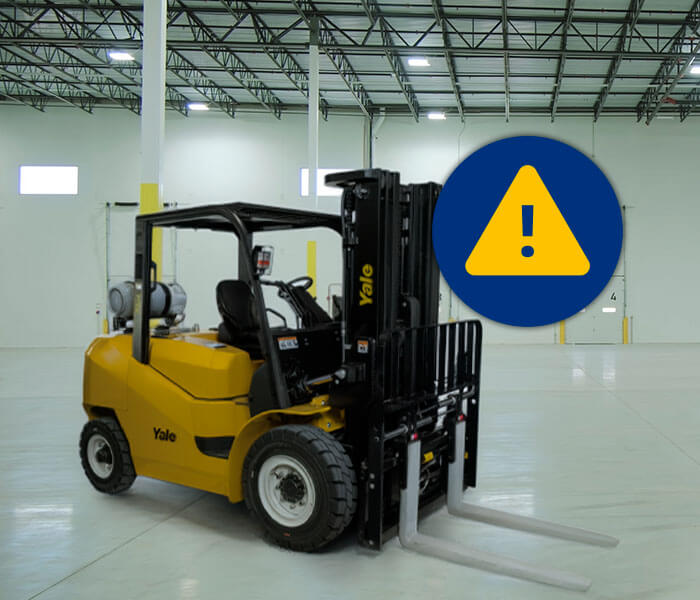
Automated safety features reduce operator errors by intervening at the exact moment unsafe conditions appear. Instead of relying on operators to catch every hazard in time, operator assistance features prevent minor mistakes from escalating.
Real-time support is especially valuable during training, when operators are still honing their judgment and timing. Examples of safety features include:
- Hydraulic lockout blocks lift functions when loads exceed the rated capacity
- Stability controls that automatically reduce speed during cornering to limit tip-over risk
- Blind-spot technology alerts to show pedestrians and obstacles outside their direct line of sight
Telematics for Remote Operator Coaching
Telematics systems extend supervision beyond physical presence and enable coaching grounded in evidence. Managers gain visibility into how their workers operate equipment across shifts and locations without needing to be on the dock.
Technology warehouse strategies must focus on improvement rather than enforcement to support operator error prevention:
- Remote visibility to give managers insight into travel speed, impacts and operating patterns from a centralized dashboard
- Data-driven coaching using impact data to identify handling issues such as repeated hard cornering or abrupt stops
- Constructive feedback that positions performance data as a mentorship tool, reinforcing safe behaviour and correcting risky habits without relying on punishment
Equipment Selection for Inexperienced Operators
Equipment choice affects how quickly new operators can reach safe, consistent performance. Automated machines remove complex decision points that challenge those unfamiliar with manual machinery.
Technology helps operators progress faster through training while reducing the amount of supervision they need. Start with tools that do more precise work for them:
- Choose forklifts with built-in automation, like reach trucks with auto-height selection, so operators don’t have to manually position every tilt.
- Standardize your fleet where possible so controls and handling feel consistent across machines, reducing retraining time and confusion.
Technology Closes the Labour Gap
Warehouses must maintain safety and productivity while access to experienced operators remains limited. You can’t conjure more 10-year veterans, but you can invest in equipment that shortens the learning curve for rookies.
Alta Material Handling delivers that advantage by supplying new and used equipment with intelligent features to shorten training time, reduce operator error and improve safety.
Contact us to discuss smart equipment options to fit your operation.
Contact Us
Headquarters
340 Hanlan Rd,Woodbridge, Ontario L4L 3P6