Autonomous Solutions
Advantages of Autonomous Forklifts
February 17, 2026
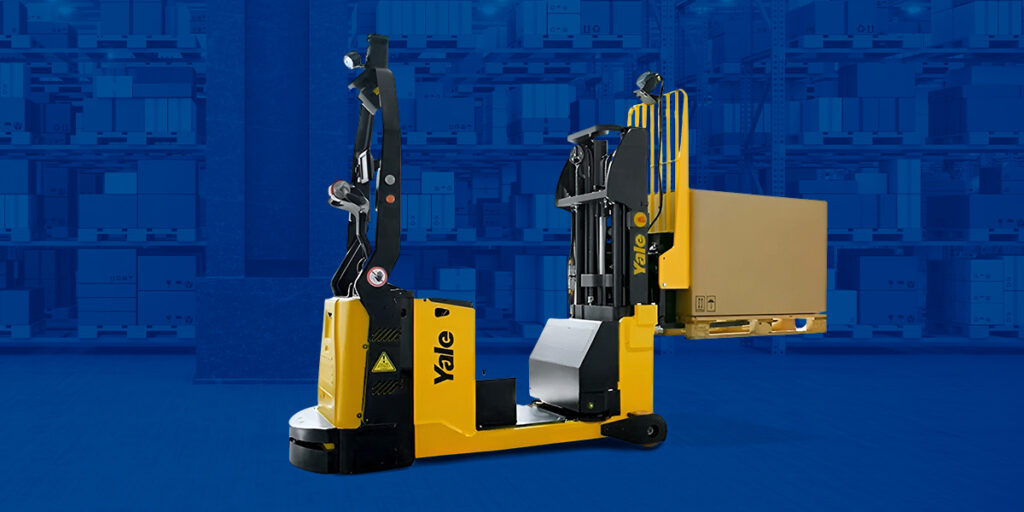
As the muscle of material handling operations, forklifts lift, transport, and stack loads in warehouses, distribution centers, and other facilities. Automation helps businesses reduce operating costs and improve efficiency with safer, optimized working environments.
Autonomous forklifts are gaining popularity for their ability to perform repeatable and predictable tasks with minimal human intervention. They optimize operations by supporting longer operating times, seamless schedules and human focus on more complex work. Before deciding whether an automated forklift is the best fit for your business, consider how they work, their applications and the benefits of automating your processes.
What Are Automated Forklifts?
Automated forklifts are automated guided vehicles (AGVs) that can operate without a driver. These machines integrate into production systems and perform all the tasks of traditional forklifts, detect human activity around them and operate around the clock. Autonomous forklifts work with advanced navigation systems with preprogrammed instructions.
Some models also include AI-powered software to perform repeated tasks quickly and safely. They also have high-tech sensors that can identify obstacles, pedestrians and other vehicles. Some common features of automated forklifts include:
- Sensors
- Cameras
- Route planning
- Collision avoidance
- Navigation systems
- Deep learning software
- Remote communication
Key Benefits of Autonomous Forklifts
Automated forklifts offer many advantages in terms of safety, efficiency and space utilization. While traditional forklifts are used for everyday tasks, they require specialized training and safety measures to perform as intended. Automating these machines allows them to optimize material handling tasks, interact with other systems and provide a safer working environment.
Increased Efficiency
Automating material handling reduces bottlenecks with programmed tasks. Autonomous forklifts work with optimized routes that minimize travel times, leading to faster, more efficient operations. These machines maximize accuracy for managing stock levels and inventory. They also offer real-time data collection that helps optimize processes.
Autonomous forklifts can perform their tasks 24/7, increasing uptime with extended operation times. Some models can also be integrated with warehouse management systems (WMS) for smooth operations and data synchronization.
Enhanced Safety
Material handling operations take place in complex spaces with a dynamic workflow, from warehouses to distribution centers. Businesses must follow proper handling practices to prevent accidents, potential damage to workers and goods, and interruptions to the supply chain. Automated forklifts allow businesses to keep up with rising demand while promoting a safe work environment.
Autonomous forklifts have reliable navigation systems and 360-degree sensors that help prevent work accidents. Some models can report and solve workflow issues independently. They are also equipped with fail-safe mechanisms and other automatic stop features to provide a fast response in case of emergency.
Cost Savings
Cutting-edge autonomous forklifts have a higher upfront cost than traditional forklifts but offer many long-term cost savings. They support increased efficiency with lower operational costs. With autonomous forklifts, you can reduce labour costs by relocating valuable workers to perform detailed work and leaving robotic tasks to the machines.
Automated forklifts also require less maintenance. They perform predictable and measured tasks, leading to less wear over time than traditional forklifts.
Flexibility and Scalability
Autonomous forklifts adapt to various settings, layouts and operations. They have adaptable navigation systems and sophisticated algorithms that create dynamic routes. They can sense environmental changes, like new pallets or blocked aisles, and adjust their routes and behaviours.
Some models also use a central control system that allows the management of multiple units, allowing you to scale your operations with a flexible, automated fleet. You can integrate autonomous forklifts and enable them to collaborate and optimize your operations with minimal disruption.
Applications of Autonomous Forklifts in Material Handling
Autonomous forklifts can be used in any setting that benefits from traditional forklifts. They offer many advantages across industries, from e-commerce to manufacturing. Some common applications of automated forklifts include:
- Loading and unloading trailers
- Automated storage and retrieval
- Moving raw materials
- Picking station replenishment
- Empty pallet management
- Transport within manufacturing facilities
- Retail applications
- Handling construction materials
Enhance Your Operations With Alta Material Handling Automated Solutions
Automated forklifts offer businesses a great advantage in improving their operations. Alta Material Handling is your partner for innovative solutions and unmatched product support. We provide material handling equipment and technology, including automated solutions. Search our robotics section and find the solution to help you achieve your business goals.